
1. Connect your channel
Open the dashboard and sign in with the Twitch account that owns your channel. Review Twitch’s permissions and complete sign-in. New channels arrive at the Setup guide; you can return to it from the sidebar later.
If you help with someone else’s stream, sign in with your own account after they add you as an editor. Choose their channel from Channels.
2. Give the bot moderator access
In the Setup guide, find Give the bot mod. Copy the command shown there and send it in your own Twitch chat. Use the account name shown in your dashboard, especially if you linked a custom bot.
/mod your_bot_username3. Pick a starting point
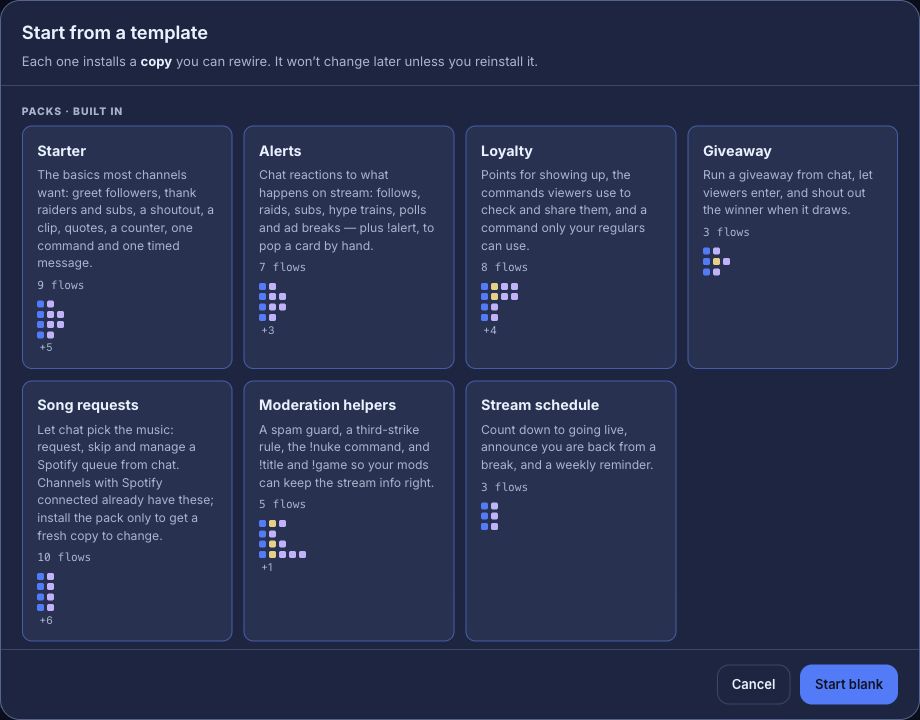
Under Pick your first flows, choose a pack and press Install selected. The Starter pack includes everyday commands and stream reactions. Review what you install, then press Finish setup. You can also add one template at a time from Flows → + New flow.
4. Make it yours
- Open Flows and find Simple command.
- Set the command to
hellowith prefix!. Change its message to something that sounds like you. - Press Save. Use Test fire to inspect a dry run in the Run log.
- Make sure the flow is live, then type
!helloin Twitch chat to check the real reply.
Follow the full command guide for aliases and personalised replies.
Before you go live
- Open Overview. It shows whether the stream is online, how many flows are on and anything that needs attention, and links to the page that fixes it.
- Check that the right channel is selected.
- Keep only the flows you want enabled. Two flows listening for the same command can both reply.
- If you use OBS, open the scene with your widgets and check delivery before streaming.
- If something does not run, start with Flows → Needs attention.
Was this guide helpful?
Thanks. Your answer helps us decide which guides to improve.